Everything

Who needs data centers in space when they can float offshore?

The power crunch for AI data centers has gotten so severe that people — not just Elon Musk — are talking about launching servers into space so they can access solar power 24/7.

One startup thinks the ocean is a better place for them. Offshore wind developer Aikido is planning to submerge a 100-kilowatt demonstration data center off the coast of Norway this year. The small unit will live in the submerged pods of a floating offshore wind turbine.

If all goes well, the company hopes to build a larger version to deploy off the coast of the U.K. in 2028. That model will sport a 15 megawatt to 18 megawatt turbine that will feed a 10 megawatt to 12 megawatt data center.

The move offshore could solve a few challenges. Proximity to power is an obvious one, since the source will sit overhead. Winds offshore are more consistent than onshore, and a modest battery could bridge any lulls. 

Submerged data centers could eliminate concerns from NIMBY (“not in my backyard”) groups who oppose data centers near their properties due to noise and and pollution concerns. 

Lastly, by floating in cold seawater, cooling the servers would be a simpler proposition. (Cooling is one particularly vexing issue for orbital data centers, since they need to employ different techniques in the vacuum of space.)

But for all the challenges offshore data centers solve, they introduce a few more. The ocean is a harsh environment. While submerged servers wouldn’t be battered by waves, they also wouldn’t be completely stationary, so they’d need to be fully battened down. Seawater is also corrosive, so any equipment, including the container and power and data connections, will need to be hardened against it.

Techcrunch event

San Francisco, CA
|
October 13-15, 2026

Aikido isn’t the first company to propose sinking data centers in seawater. Microsoft first floated the idea over a decade ago, and in 2018 it launched an experiment off the coast of Scotland, which was modestly successful. Only six of more than 850 servers failed in the 25-month trial. (The data hall was filled with inert nitrogen gas, which might help explain the servers’ low failure rates.) 

Microsoft accrued a number of patents over the years, which it open sourced in 2021. But by 2024, the company had deep-sixed the project.


Read More

Eight Sleep raises $50M at $1.5B valuation

Sleep tech company Eight Sleep today said that it has raised $50 million in a strategic round led by Tether Investments at a valuation of $1.5 billion. This new round comes after the startup closed a $100 million round last August from investors such as HSG, Valor Equity Partners, Founders Fund, and Y Combinator.

The startup, which sells smart mattress accessories that can track your sleep patterns and adjust temperatures as you sleep, didn’t disclose its valuation for the previous round, but it was valued at $500 million post-money in 2021 when it raised an $86 million Series C led by Valor Equity Partners. The company has raised over $310 million to date, according to Crunchbase.

Eight Sleep said it was free-cash-flow positive in 2025 and plans to use the new funding for new products, global expansions, and clinical validation. It currently ships its products to over 34 countries.

The company said it wants to expand beyond selling consumer products and has sought approval from the U.S. Food and Drug Administration for products that can detect and mitigate sleep apnea.

“What we’re building doesn’t exist yet — a system that understands your body better each night and acts on that knowledge. Our goal is to build the defining health technology company of this generation,” Matteo Franceschetti, co-founder and CEO of Eight Sleep, said in a statement.

The company said that it wants to work on a sleep-focused AI agent that controls the temperature, elevation, and firmness of its products proactively and prevents sleep disruption. It said that the agent simulates many scenarios before users get into bed and prepares its products for optimal sleep.

Eight Sleep said that its models are trained on proprietary data, and early pilots of its AI-driven guidance have resulted in people changing their habits, such as exercise timing, caffeine intake, or sleep schedules, based on the analysis provided by the app.

Techcrunch event

San Francisco, CA
|
October 13-15, 2026

Last year, the company launched a hydro blanket that controls temperature, and a new pillow cover that can provide temperature control for the head and neck.

Eight Sleep was caught in a controversy last October when users’ mattress accessories stopped working because of an AWS outage that prevented them from connecting to its servers. The beds overheated, and the company had to add an “outage mode” to its products for such situations.

Eight Sleep competes with the likes of BedJet and Chilipad on the mattress and temperature control front, and with Oura and Whoop in the sleep-tracking market.

Read More

Why AI startups are selling the same equity at two different prices

As competition among AI startups heats up, founders and VCs are turning to novel valuation mechanisms to manufacture a perception of market dominance.

Until recently, the most sought-after companies raised multiple rounds of funding in quick succession at escalating valuations. However, because constant fundraising distracts founders from building their products, lead VCs have devised a new pricing structure that effectively consolidates what would have been two separate funding cycles into one.

Recent rounds employing this scheme include Aaru’s Series A. The synthetic-customer research startup raised a round led by Redpoint, which invested a large portion of its check at a $450 million valuation, The Wall Street Journal reported. Redpoint then invested a smaller portion at a $1 billion valuation, and other VCs joined at that same $1 billion price point, according to our reporting. TechCrunch was the first to report Aaru’s financing, including its multi-tiered valuation.

The approach allows desirable startups like Aaru to call themselves a unicorn — valued at more than $1 billion — even though a significant portion of the equity was acquired at a lower price.

“It is a sign that the market is incredibly competitive for venture capital firms to win deals,” said Jason Shuman, a general partner at Primary Ventures. “If the headline number is huge, it’s also an incredible strategy to scare away other VCs from backing the number two and number three players.”

The massive “headline” valuation creates the aura of a market winner, even though the lead VC’s average price was significantly lower.

Multiple investors told TechCrunch that until recently, they had never encountered a deal where a lead investor splits their capital between two different valuation tiers in a single round.

Techcrunch event

San Francisco, CA
|
October 13-15, 2026

Wesley Chan, co-founder and managing partner at FPV Ventures, views this valuation tactic as a symptom of bubble-like behavior. “You can’t sell the same product at two different prices. Only airlines can get away with this,” he said.

In most cases, founders offer a discount to top-tier VCs because their involvement serves as a powerful market signal that helps attract talent and future capital.

But since these rounds are frequently oversubscribed, startups have found a way to accommodate the excess interest: Rather than turning away eager investors, they allow them to participate immediately, but at a significantly higher price. These investors are willing to pay that premium because it is the only way to secure a spot on a high-demand cap table.

Another startup that gave preferential pricing to its lead investor is Serval, an AI-powered IT help desk startup, according to The Wall Street Journal. While Sequoia’s lowest entry price was at a $400 million valuation, Serval announced in December that its $75 million Series B valued the company at $1 billion.

While the high “headline” valuation can help recruit talent and attract corporate customers who may view the company as having a stronger market position than its competitors, the strategy is not without its risks.

Even though the true, blended valuation for these startups is lower than $1 billion, they are expected to raise their next round at a valuation that is higher than the headline price; otherwise it will be a punitive down round, Shuman said.

These companies are in high demand now, but they may face unexpected challenges that will make it very hard for them to justify their high valuations. In a down round, employees and founders end up with a smaller ownership percentage of the company; they can also erode the confidence of partners, customers, future investors, and potential new hires.

Jack Selby, managing director at Thiel Capital and founder of Copper Sky Capital, warns founders that chasing extreme valuations is a dangerous game, pointing to the painful market reset of 2022 as a cautionary tale. “If you put yourself on this high-wire act, it’s very easy to fall off,” he said.

Read More

A suite of government hacking tools targeting iPhones is now being used by cybercriminals

Security researchers have identified a suite of powerful hacking tools capable of compromising iPhones running older software that they say has passed from a government customer into the hands of cybercriminals.

Google said Tuesday that it first identified the exploit kit, dubbed Coruna, in February 2025 during a surveillance vendor’s attempt to hack into someone’s phone with spyware on behalf of a government customer. It found the same exploit kit months later targeting Ukrainian users in a broad-scale campaign by a Russian espionage group, and then later found it used by a financially motivated hacker in China.

It’s unclear how the tools leaked or proliferated, but Google security researchers warned of an emerging market for “secondhand” exploits, which are sold to hackers motivated by money to extract more value out of the exploit.

The discovery also shows how exploits and back doors designed to be used by governments can leak and ultimately be abused by cybercriminals or other non-state actors. Mobile security company iVerify obtained and reverse-engineered the hacking tools, saying in a blog post that it linked the Coruna exploit kit to the U.S. government, based on similarities to hacking tools previously attributed to the United States.

“The more widespread the use, the more certain a leak will occur,” said iVerify. “While iVerify has some evidence that this tool is a leaked US government framework, that shouldn’t overshadow the knowledge that these tools will find their way into the wild and will be used unscrupulously by bad actors.”

Google said the hacking tools are powerful, as they can bypass an iPhone’s defenses simply through visiting a malicious website containing the exploit code — such as being sent a malicious link — in what is known as a “watering hole” attack. According to Google, the Coruna kit can hack into an iPhone five separate ways by relying on and chaining together 23 separate vulnerabilities in its digital arsenal. Affected devices range from iPhone models running iOS 13 up to 17.2.1, which released in December 2023.

According to Wired, which first reported the news, the Coruna kit contains components that were previously used in a hacking campaign dubbed Operation Triangulation. Russian cybersecurity firm Kaspersky claimed in 2023 that the U.S. government tried to hack several iPhones belonging to its employees.

Techcrunch event

San Francisco, CA
|
October 13-15, 2026

While leaks of hacking tools are rare, they are not unheard of. In 2017, the U.S. National Security Agency discovered that tools it had developed to hack into Windows computers worldwide had been stolen. The Windows back door, known as EternalBlue, was later published and was used by cybercriminals in subsequent attacks, including the 2017 WannaCry ransomware attack by North Korea.

TechCrunch also recently reported on the case of Peter Williams, the former head of the U.S. defense contractor L3Harris Trenchant, who was sentenced to more than seven years in prison after pleading guilty to stealing and selling eight exploits to a broker known to work with the Russian government.

According to prosecutors, Williams sold exploits that were capable of hacking into “millions of computers and devices” worldwide. At least one exploit was sold to a South Korean broker. It’s unclear if the exploits were ever disclosed to the software makers, or patched.

Read More

Alibaba’s Qwen tech lead steps down after major AI push

Alibaba’s Qwen AI project has lost one of its most visible technical leaders just a day after the Chinese tech giant unveiled its new Qwen 3.5 open-weight small models.

Junyang Lin, a central technical leader on Alibaba’s Qwen team, said in a post on X on Tuesday that he was “stepping down” from the project, without elaborating. He joined Alibaba in July 2019 and became part of the Qwen team in April 2023, according to his LinkedIn profile.

The abrupt departure, which drew strong reactions from colleagues and industry partners, comes as global competition among AI developers intensifies and companies race to build models rivaling those from OpenAI, Google, and Anthropic.

Alibaba’s Qwen family of models has emerged as one of China’s most prominent open-weight AI efforts, with recent releases posting benchmark results that often rival systems from leading U.S. developers. The Chinese tech giant introduced the model in April 2023 and opened it to public use that September after receiving regulatory clearance.

Alibaba introduced its Qwen 3.5 Small Model series on Monday, with four models spanning 0.8B, 2B, 4B, and 9B parameters. The systems, the company said, are native multimodal models designed for uses ranging from on-device AI deployment to lightweight agents. The launch drew attention from figures in the AI community, including Elon Musk, who wrote on X that the models showed “impressive intelligence density.”

Lin’s departure came just as the Qwen team was pushing ahead with new releases, prompting unusually strong reactions from colleagues and partners who described his role in the project as central.

Wenting Zhao, a research scientist on the Qwen team, described Lin’s departure as “the end of an era,” thanking him in a post on X for helping drive the project’s advances in open source AI and engineering. Yuchen Jin, chief technology officer of AI infrastructure startup Hyperbolic, said Lin helped connect Qwen with the global developer community, recalling late-night collaboration with the team during model launches. Tiezhen Wang, head of APAC ecosystem at Hugging Face, also described Lin’s departure as “an immense loss” for the Qwen project.

Techcrunch event

San Francisco, CA
|
October 13-15, 2026

The circumstances surrounding Lin’s departure remain unclear. Lin did not respond to a request for comment.

Chen Cheng, a contributor to the Qwen project, wrote that he was “heartbroken” by the news. In his post on X, Cheng appeared to be addressing Lin directly, writing, “I know leaving wasn’t your choice” and said the team had been working together on model launches only hours earlier.

Binyuan Hui, another member of the Qwen team, has updated his X profile to describe himself as “formerly MTS @Alibaba_Qwen.” However, it is not immediately clear whether he had left the company or when the change was made.

Alibaba did not respond to a request for comment on the reasons for the move or on the leadership structure of the Qwen team.

Read More

Just three companies dominated the $189B in VC investments last month

AI continues to dominate the venture world, per a new Crunchbase report.

A record $189 billion of global venture capital flowed to startups in February, according to the report. AI startups overall raised $171 billion, or 90% of the capital raised last month. It’s a stunning number that feels like only the start. 

That record spending was more than three times the global VC spend in January and was dominated by mammoth funding rounds from just three companies: OpenAI, Anthropic, and Waymo.

OpenAI’s latest $110 billion raise led the pack. It was one of the largest private rounds ever raised and valued the company at $730 billion. Its rival Anthropic nabbed a $30 billion Series G at a $380 billion valuation. Lastly, Waymo raised $16 billion at a valuation of $126 billion.

These three companies alone were responsible for 83% of the venture dollars raised last month.

The amount raised by just OpenAI, Anthropic, and Waymo last month was one-third of the total $425 billion venture spend in 2025, according to Crunchbase.

Read More

TikTok down for some in US, thanks to second Oracle outage since sale

Some TikTok users in the U.S. are having trouble using the app, which the company attributes to an issue with an Oracle data center.

“Creators may temporarily experience lags in posting content while Oracle works to resolve the issue,” TikTok said on X.

According to user-generated reports on Downdetector, the issue has been ongoing since before 9 a.m. ET. Oracle’s own post on X indicates the outage started around then as well.

Oracle is part of an investor group that owns 80% of the TikTok USDS Joint Venture, which was created to comply with a national security law that required the Chinese company ByteDance to divest its American TikTok business or be banned in the United States.

An issue with an Oracle data center is impacting some parts of the TikTok U.S. user experience. Creators may temporarily experience lags in posting content while Oracle works to resolve the issue. We appreciate your patience and understanding and will keep you updated. https://t.co/ex7S4vM9yU— TikTok USDS Joint Venture (@tiktokusdsjv) March 3, 2026

Oracle has been providing cloud services and managing user data for TikTok since before the creation of the TikTok USDS Joint Venture. Since the sale, Oracle issues have now contributed to two major TikTok outages.

Just days after the sale was finalized in January, TikTok experienced a similar outage, which it attributed to a winter storm that impacted a major Oracle data center.

Oracle has not yet identified the cause of Tuesday’s outage.

Techcrunch event

San Francisco, CA
|
October 13-15, 2026

Read More

ChatGPT’s new GPT-5.3 Instant model will stop telling you to calm down

Take a breath, stop spiraling. You’re not crazy, you’re just stressed. And honestly, that’s okay.

If you felt immediately triggered reading these words, you’re probably also sick of ChatGPT constantly talking to you as if you’re in some sort of crisis and need delicate handling. Now, things may be improving. OpenAI says its new model, GPT-5.3 Instant, will reduce the “cringe” and other “preachy disclaimers.”

According to the model’s release notes, the GPT-5.3 update will focus on the user experience, including things like tone, relevance, and conversational flow — areas that may not show up in benchmarks, but can make ChatGPT feel frustrating, the company said.

Or, as OpenAI put it on X, “We heard your feedback loud and clear, and 5.3 Instant reduces the cringe.”

In the company’s example, it showed the same query with responses from the GPT-5.2 Instant model compared with the GPT-5.3 Instant model. In the former, the chatbot’s response starts, “First of all — you’re not broken,” a common phrase that’s been getting under everyone’s skin lately.

In the updated model, the chatbot instead acknowledges the difficulty of the situation, without trying to directly reassure the user.

The insufferable tone of ChatGPT’s 5.2 model has been annoying users to the point that some have even canceled their subscriptions, according to numerous posts on social media. (It was a huge point of discussion on the ChatGPT Reddit, for instance, before the Pentagon deal stole the focus.)

People complained that this type of language, where the bot talks to you as if it assumes you’re panicking or stressed when you were just seeking information, comes across as condescending.

Often, ChatGPT replied to users with reminders to breathe and other attempts at reassurance, even when the situation didn’t warrant it. This made users feel infantilized, in some cases, or as if the bot was making assumptions about the user’s mental state that just weren’t true.

As one Reddit user recently pointed out, “no one has ever calmed down in all the history of telling someone to calm down.”

It’s understandable that OpenAI would attempt to implement guardrails of some kind, especially as it faces multiple lawsuits accusing the chatbot of leading people to experience negative mental health effects, which sometimes included suicide.

But there’s a delicate balance between responding with empathy and providing quick, factual answers. After all, Google never asks you about your feelings when you’re searching for information.

Read More

Anduril aims at $60 billion valuation in new funding round

Palmer Luckey’s defense-tech company is in the middle of a multibillion-dollar funding round led by Thrive Capital and Andreessen Horowitz, according to a new report from The Wall Street Journal.

The funding round would come less than a year after the company’s Series G, which closed in June with $2.5 billion against a $30 billion valuation. Lux Capital and Founders Fund are also expected to participate.

A previous report from Bloomberg said the new round could bring as much as $8 billion of capital into the company, which closed its previous funding round last summer.

The round comes at an awkward moment for defense startups. After a contract dispute between Anthropic and the Pentagon, the U.S. government is in the process of canceling all its contracts with the AI company, and Secretary of Defense Hegseth has threatened to designate the company as a supply-chain risk.

While not explicitly endorsing the supply-chain-risk designation, Luckey has vocally supported the government’s stance. “At the end of the day,” Luckey wrote in a recent X post, “you have to believe that our imperfect constitutional republic is still good enough to run a country without outsourcing the real levers of power to billionaires and corpos and their shadow advisors.”

Read More

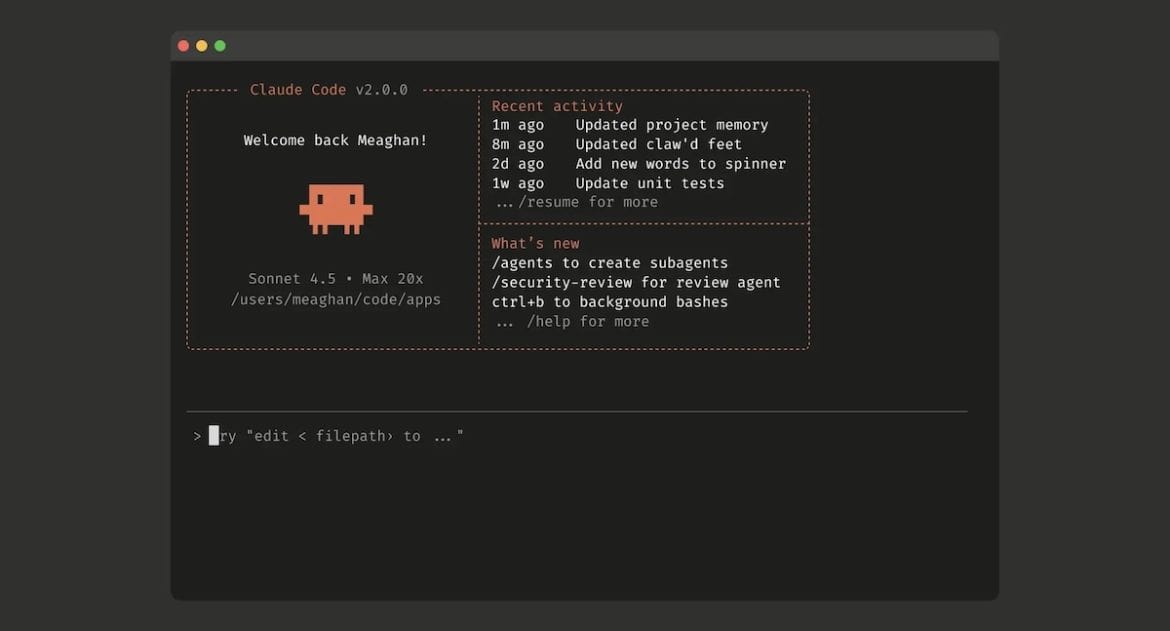
Claude Code rolls out a voice mode capability

Anthropic is bringing Voice Mode to Claude Code, the company’s AI coding assistant for developers. The launch of voice mode marks a significant step toward more hands-free, conversational coding workflows.

Thariq Shihipar, an engineer at Anthropic, announced the feature’s gradual release on X on Tuesday. According to Shihipar, voice mode is now live for about 5% of users, with a broader rollout planned in the coming weeks.

Voice mode is designed to streamline the coding experience by letting users interact with Claude Code through spoken commands. To enable it, type /voice to toggle it on, then speak your command and Claude Code will execute the request. For instance, “refactor the authentication middleware.”

Voice mode is rolling out now in Claude Code. It’s live for ~5% of users today, and will be ramping through the coming weeks.You’ll see a note on the welcome screen once you have access. /voice to toggle it on! pic.twitter.com/P7GQ6pEANy— Thariq (@trq212) March 3, 2026

It remains unclear what the limitations of the new capability are, including whether there are caps on voice interactions or specific technical constraints. It’s also unknown if this feature was built in collaboration with a third-party AI voice provider like ElevenLabs, with whom Anthropic was reportedly in talks.

The company has not yet responded to requests for comment from TechCrunch.

Anthropic launched Voice Mode for its standard Claude chatbot last May, allowing users to interact with the model via voice for a variety of general-purpose tasks. 

Techcrunch event

San Francisco, CA
|
October 13-15, 2026

The competition in AI coding assistants is fierce, with Microsoft’s GitHub Copilot, Cursor, Google, and OpenAI all vying for developers’ attention. Yet, Claude Code stands out as one of the most widely adopted tools in the market today. In February, Anthropic reported that Claude Code’s run-rate revenue surpassed $2.5 billion, more than doubling since the beginning of 2026. Plus, weekly active users have doubled since January.

Meanwhile, Claude’s mobile app has seen a dramatic jump in user growth after the company refused to allow the Department of Defense to use its AI for domestic surveillance or autonomous weapons. In the aftermath, the app soared to the top of the U.S. App Store charts, overtaking ChatGPT.

Read More

1 3 4 5 6 7 337